 Skip to content
When you receive a quotation for electric tricycles, do you ever wonder: will the factory actually deliver on time, or will delays happen after I pay the deposit? The answer is hidden in the factory's production process—how they confirm configuration, schedule work, prepare parts, assemble, inspect, and ship. If the process is clear and controlled, the factory can reduce delivery risk; if not, you may face delays, inconsistent quality, or packaging damage.1
The production process of an electric tricycle is not just a list of steps. For dealers, it is a chain that controls configuration accuracy, lead-time stability, quality consistency, and shipment safety from order confirmation to container loading. Understanding this process helps you judge whether a supplier can deliver reliably or will improvise after receiving your payment.
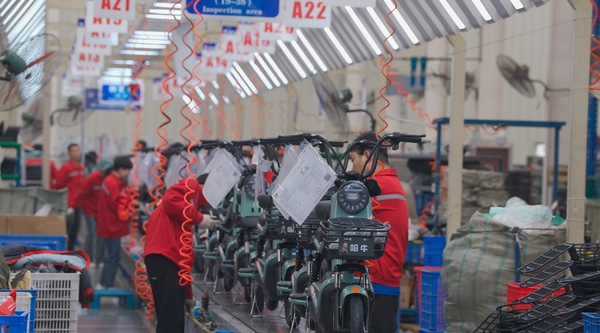
If you have ever been told "lead time is 30 days" without further explanation, or received a shipment with mismatched parts, wrong colors, or damaged packaging, you will understand why the production process matters. Let me take you inside our factory's daily work and show how each step answers a real dealer concern.
How does an electric tricycle factory confirm order configuration, and why does this step matter for lead time?
When you send a purchase order, the first risk you face is miscommunication: will the factory produce exactly what you ordered, or will they substitute parts, change colors, or deliver a different model because "it is similar"? This is why order configuration confirmation is the first step in our production process—and the step that directly affects lead time.
In our factory, order configuration confirmation means we check and lock every detail before scheduling production: vehicle model, motor power, battery capacity, controller type, tire size, color, optional accessories (like cargo box, passenger seat, or roof), packaging method, and certification documents. This step prevents mistakes that would delay production or force rework after assembly.2

Why configuration affects lead time more than you expect
Not all electric tricycle orders take the same time to produce.3 Here are factors that can change the schedule:
| Configuration factor | How it affects lead time | Example |
|---|---|---|
| Motor and controller matching4 | If the combination is not standard, we need extra time to test compatibility before mass production | A dealer orders 1000W motor with 60V controller; we must verify the controller can handle peak current before confirming lead time |
| Battery capacity and certification | Larger batteries or batteries with UN38.3 certification need longer preparation and inspection time5 | 60Ah lithium battery with full export documents takes 5-7 days longer than standard 20Ah lead-acid battery |
| Custom color and paint finish | Non-stock colors require paint mixing, test spraying, and drying time, adding 3-5 days | A dealer orders metallic blue instead of our standard black or red |
| Packaging method | Semi-knockdown (SKD) packaging takes less time than fully assembled packaging because assembly is skipped before loading | SKD can save 2-3 days per container |
| Order quantity | Small orders (less than 50 units) may wait for parts shared with larger orders; very large orders (over 500 units) may be split into batches | An order of 30 units may wait 1 week if key parts are allocated to a 200-unit order first |
In our factory, after the sales team receives your order, the production planning department holds a meeting with parts preparation, assembly, quality inspection, and logistics teams. We check:
- Are all configured parts in stock, or do we need to order from suppliers?
- Does the configuration require special testing or certification documents?
- Can the order share a production batch with other orders, or does it need a separate run?
Only after this meeting can we give you a realistic lead time. If a dealer asks for a fixed "30-day" answer before configuration is confirmed, the factory is either guessing or planning to substitute parts later. Both outcomes create risk.
What happens during production scheduling and parts preparation, and why does this step reduce quality risk?
Once configuration is locked, the next question is: will the factory start production immediately, or will there be delays because parts are missing? In our experience, many shipment delays do not happen during assembly—they happen before assembly because the factory did not prepare parts properly.6
Production scheduling is when we assign your order to a specific time slot on the assembly line and confirm that all required parts are ready for that slot. Parts preparation includes ordering, incoming inspection, and storage. If parts arrive late, have quality defects, or do not match the order configuration, we catch the problem here instead of discovering it during assembly.
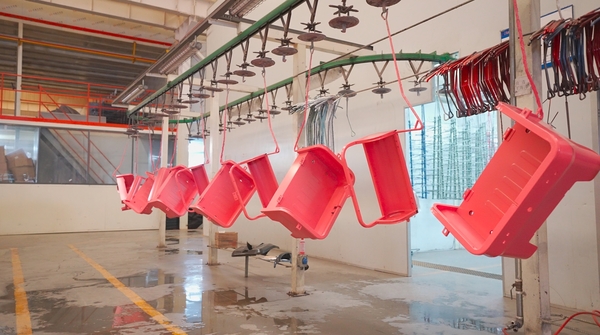
How incoming inspection protects dealers from inconsistent quality
Every electric tricycle has about 200-300 individual parts7: frame, front fork, swing arm, handlebars, wheels, tires, motor, controller, battery, wiring harness, lights, brake system, seat, cargo box or passenger seat, dashboard, mirrors, and fasteners. If even one batch of parts has a defect—such as a controller that overheats, a battery that does not hold charge, or a frame with weak welding—the entire shipment can have quality problems.
In our factory, incoming inspection checks:
| Part category | What we inspect | Why it matters for dealers |
|---|---|---|
| Frame and structural parts | Welding quality, tube thickness, paint adhesion, dimensional accuracy | Weak welding or thin tubes can cause frame cracks or breakage during use; poor paint can peel after a few months |
| Motor and controller | No-load and load test, temperature rise, noise, cable connection quality | A mismatched or defective motor-controller pair will cause power loss, overheating, or complete failure |
| Battery | Capacity test, voltage consistency, BMS (battery management system) function, short-circuit protection | A battery that does not match the rated capacity will reduce range and cause customer complaints; unsafe batteries can catch fire8 |
| Brake system | Drum brake or disc brake gap, cable tension, pad thickness, parking brake holding force | Brake failure is the most dangerous quality problem for end users and can lead to legal liability |
| Wiring harness and connectors | Insulation test, connector fit, waterproof seal, cable routing | Loose or poorly sealed connectors can cause electrical faults, especially in rain or humid climates9 |
If a batch of parts fails inspection, we contact the supplier immediately and delay production rather than using defective parts. This may extend lead time by a few days, but it prevents dealers from receiving a container full of defective vehicles.
Some factories skip incoming inspection to save time and cost. The result is that defects are discovered during assembly, after assembly, or—worst case—after shipment. For dealers, this means after-sales costs, customer complaints, and damage to your brand reputation.
How is an electric tricycle assembled in the factory, and what quality checks happen during assembly?
After parts are ready, assembly begins. This is the step most dealers imagine when they think of "production," but assembly is not simply bolting parts together. Every assembly station has quality checkpoints, and these checkpoints are where we prevent mistakes that would be expensive to fix later.10
Electric tricycle assembly is divided into stations: frame preparation → vehicle structure assembly → electrical system installation → whole-vehicle debugging → cosmetic finishing. At each station, workers follow standard operating procedures (SOPs), and quality inspectors check specific items before the vehicle moves to the next station.
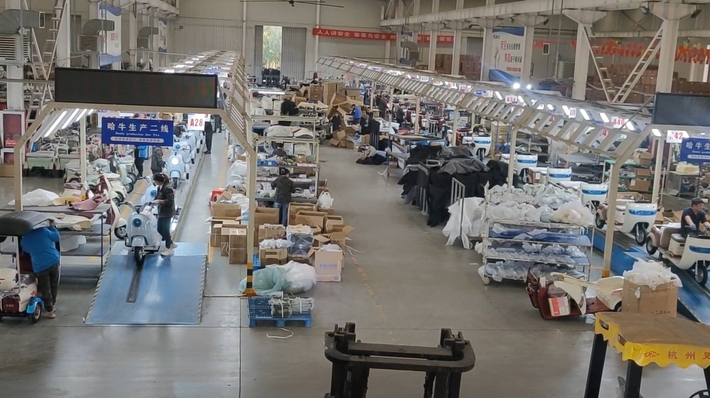
Station-by-station process and quality checkpoints
1. Frame preparation station
The frame is the foundation of the vehicle. Workers install the front fork, swing arm, rear axle, and steering system. Quality checks include:
- Front fork alignment: if the fork is not straight, the vehicle will pull to one side when riding
- Swing arm welding and bushing fit: loose bushings cause noise and instability
- Steering system free play: excessive play makes steering difficult and unsafe
In our factory, if the frame assembly fails inspection, it is sent back for rework before moving forward. Some factories let defective frames continue down the line, and the problem is only discovered during final inspection or after shipment.
2. Vehicle structure assembly station
Next, workers install the wheels, tires, brakes, handlebars, seat, cargo box or passenger seat, and body panels. Quality checks include:
- Tire pressure and bead seating: improper pressure affects ride quality and range
- Brake adjustment: front and rear brakes must engage smoothly and evenly
- Cargo box or passenger seat mounting: loose bolts can cause rattling or detachment
- Panel fit and finish: gaps, misalignment, or scratches are cosmetic defects that affect dealer sales
3. Electrical system installation station
This is the most critical station for electric tricycles. Workers install the motor, controller, battery, wiring harness, dashboard, lights, horn, turn signals, and all electrical connectors. Quality checks include:
- Motor mounting and cable connection: the motor must be securely bolted and the cable must be strain-relieved
- Controller location and heat dissipation: the controller should be mounted where it stays dry and does not overheat
- Battery installation and BMS connection: the battery must be firmly mounted and the BMS wiring must be correct
- Wiring harness routing and protection: cables must be routed away from sharp edges, moving parts, and hot surfaces
- Connector sealing: all connectors must be fully inserted and sealed to prevent water ingress
In our factory, we use a checklist at this station, and the worker and inspector both sign off before the vehicle moves forward. If wiring is incorrect, the vehicle will not work, and if connectors are not sealed, electrical faults will appear after a few weeks of use.
4. Whole-vehicle debugging station
After assembly is complete, the vehicle goes to the debugging station. This is where we test:
- Power-on check: does the dashboard light up, do the lights work, does the horn sound?
- Motor operation: does the motor respond smoothly to throttle input, or does it jerk or stall?
- Brake function: do the brakes engage fully, and do the brake lights activate?
- Speed and range test: we run the vehicle on a test track to verify speed and power consumption match specifications
- Noise and vibration check: unusual noise or vibration indicates a loose part or misaligned component
Vehicles that fail debugging are marked and sent for repair. Only vehicles that pass all tests move to cosmetic finishing.
5. Cosmetic finishing station
The final assembly step is cosmetic: workers clean the vehicle, remove protective film, check paint and decals, and verify that all optional accessories are installed. Quality checks include:
- Paint and decal appearance: no scratches, smudges, or peeling
- Optional accessory installation: if the dealer ordered a roof, rearview mirrors, or a specific cargo box, it must be present
- Overall cleanliness: the vehicle must look new, not dusty or greasy
What is whole-vehicle final inspection, and how does it protect dealers from shipment problems?
Even if a vehicle passes all assembly station checks, it can still have hidden defects: a loose bolt that was missed, a connector that seems tight but is not fully inserted, or a paint scratch that was covered by dust. This is why final inspection is a separate step that happens after assembly is complete and before packaging begins.
Whole-vehicle final inspection is a comprehensive check performed by a dedicated quality team, not the assembly workers. The inspector uses a checklist that covers mechanical, electrical, cosmetic, and safety items. Vehicles that fail final inspection are sent for rework and re-inspection. Only vehicles that pass can be packaged and shipped.
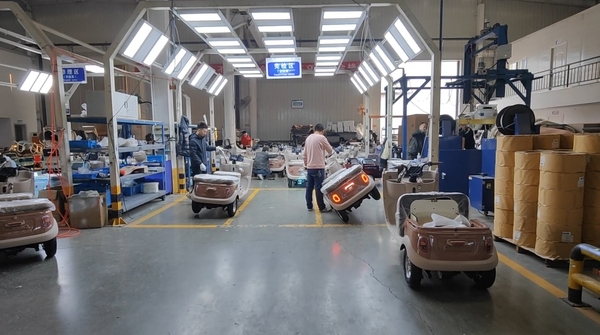
What the final inspection checklist includes
In our factory, the final inspection checklist has more than 50 items. Here are the main categories:
| Category | Inspection items | Pass/fail criteria |
|---|---|---|
| Mechanical | Frame, fork, swing arm, steering, wheels, tires, brakes, seat, cargo box mounting | No cracks, loose bolts, bent parts, misalignment, or excessive free play |
| Electrical | Motor, controller, battery, wiring, lights, horn, dashboard, connectors | All functions work correctly, no loose or exposed wires, connectors fully sealed |
| Cosmetic | Paint, decals, body panels, optional accessories | No scratches, dents, peeling, or missing parts |
| Safety | Brake holding force, parking brake, headlight beam pattern, turn signal visibility | Meets local regulations or customer requirements |
| Documentation | Certificate of conformity, user manual, warranty card, packing list | Complete and accurate, matching vehicle configuration |
If the dealer requires CE, EEC, or other certification, we also verify that the certification documents are included and match the vehicle model and serial number.
Why final inspection cannot be replaced by sampling
Some factories only inspect a sample of vehicles—for example, 5% of the order—and assume the rest are the same. This is risky because defects do not distribute evenly11. A batch of bad controllers may only affect 10 vehicles out of 100, and if those 10 are not inspected, they will be shipped to the dealer.
In our factory, we inspect 100% of export orders because the cost of catching a defect before shipment is much lower than the cost of dealing with the defect after shipment. For dealers, this means fewer after-sales problems, fewer return shipments, and less risk of losing customers due to quality complaints.
How does packaging and container loading protect vehicles during long-distance transport?
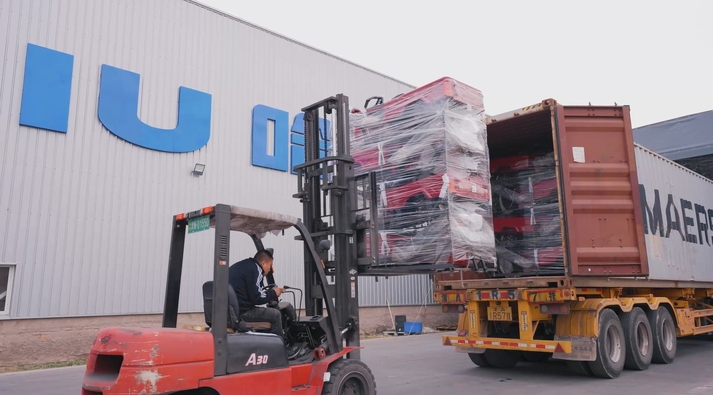
After passing final inspection, the vehicle is ready to ship—but the journey from factory to dealer is not short. Electric tricycles for export typically travel by container ship, often spending 30-60 days in transit, passing through multiple handling points, and experiencing vibration, moisture, and temperature changes.12 If packaging is inadequate, vehicles can arrive with scratches, dents, broken parts, or non-functional batteries.
Packaging and container loading are the last steps where the factory controls quality. Proper packaging protects the vehicle; proper loading prevents damage during transport; and proper documentation ensures smooth customs clearance.
Packaging options for electric tricycles
There are three main packaging methods for export:
| Method | Description | Advantages | Disadvantages | When to use |
|---|---|---|---|---|
| Fully assembled in carton | Vehicle is fully assembled, placed in a large carton with foam or cardboard protection | Dealer can sell immediately after unpacking; minimal setup required | Takes more container space; higher shipping cost per unit | Small orders, high-value models, or markets where dealers do not have assembly capability |
| Semi-knockdown (SKD) in carton | Some parts (handlebars, seat, cargo box, wheels) are removed and packed separately; main frame and motor are assembled | Saves container space; reduces shipping cost; protects vulnerable parts | Dealer must reassemble; requires basic tools and skills | Most export orders, especially for dealers with assembly workshops |
| Iron frame crate | Vehicle is secured in a custom-welded iron frame that protects all sides | Maximum protection for long-distance or rough-handling transport | High packaging cost; heavy; takes container space | High-value models, small orders, or routes with known handling problems |
In our factory, most export orders use SKD packaging because it balances cost, space, and protection. We pack each vehicle in a carton with foam padding on all corners, wrap vulnerable parts (dashboard, lights, mirrors) in bubble wrap, and secure the battery with straps to prevent movement.
What happens during container loading
Container loading is not just pushing vehicles into a container. In our factory, we follow these steps:
- Check container condition: before loading, we inspect the container for water leaks, rust, or damage that could harm the vehicles
- Load vehicles in layers: we load vehicles in a specific order to maximize space and prevent crushing
- Secure with straps and padding: we use ratchet straps to hold vehicles in place and cardboard or foam padding to prevent contact between vehicles
- Leave inspection space: we leave a small gap at the container door so customs officials can inspect without unloading the entire container
- Seal and document: after loading, we seal the container, take photos, and record the seal number on the packing list
If container loading is done carelessly, vehicles can shift during transport, causing scratches, broken parts, or even tipping over. For dealers, this means receiving damaged goods and having to negotiate claims with the factory or shipping company.
Conclusion
The production process of an electric tricycle—from order configuration to shipment—is not just a factory's internal procedure; it is a chain that controls your delivery risk, quality consistency, and after-sales cost. Understanding this process helps you choose a supplier who can deliver reliably, not just promise a low price and fast lead time.
"Supplier Quality Management: A Complete Guide - Deltek", https://www.deltek.com/en/manufacturing/qms/supplier-quality-management. ISO quality-management guidance describes the process approach as a way to control interrelated activities and improve consistency of outputs; this supports the general link between controlled production processes and reduced delivery or quality risk, although it does not evaluate this electric-tricycle factory directly. Evidence role: expert_consensus; source type: institution. Supports: A quality-management source should support that controlled, documented processes help organizations achieve consistent outputs and reduce nonconformities.. ↩
"Work Order Management: Complete Guide for Manufacturers - Bizowie", https://bizowie.com/work-order-management-complete-guide-for-manufacturers. Research on product configuration and mass-customization systems links accurate configuration data to feasible production planning and reduced downstream correction; this supports the claim contextually, without proving the exact delay rate for electric tricycle orders. Evidence role: mechanism; source type: paper. Supports: A manufacturing or operations-management paper should support that product configuration accuracy affects production planning, rework, and lead time.. ↩
"Leadtime-variety tradeoff in product differentiation - Penn State", https://pure.psu.edu/en/publications/leadtime-variety-tradeoff-in-product-differentiation/. Operations-management literature on make-to-order and customized production reports that product variety and configuration complexity can affect planning, procurement, and manufacturing lead times; this provides contextual support rather than electric-tricycle-specific timing data. Evidence role: general_support; source type: paper. Supports: An operations-management source should support that customized or varied product configurations tend to affect production lead times.. ↩
"[PDF] High Temperature Brushless DC Motor Controller Design - OSTI.GOV", https://www.osti.gov/servlets/purl/1115706. Technical references on electric motor drives explain that controllers must be matched to motor voltage, current, and thermal limits; this supports the need to verify motor-controller compatibility before production, though it does not specify this factory's test procedure. Evidence role: mechanism; source type: education. Supports: A technical source should explain that motor controllers must be rated for the motor's voltage, current, and operating conditions.. ↩
"Lithium Battery Test Summaries (TS) | PHMSA", https://www.phmsa.dot.gov/training/hazmat/new-un-requirement-test-summaries. The UN Manual of Tests and Criteria, section 38.3, sets transport testing requirements for lithium batteries; this supports the need for additional battery documentation and checks, although it does not independently quantify the 5-7 day lead-time increase stated in the article. Evidence role: definition; source type: institution. Supports: An international transport-regulation source should support that lithium batteries are subject to UN 38.3 testing and transport documentation requirements.. ↩
"Supply chain disruptions and resilience: a major review and future ...", https://pmc.ncbi.nlm.nih.gov/articles/PMC7792559/. Supply-chain research identifies component availability, supplier delay, and material shortages as causes of production disruption; this supports the general claim that delays may arise before assembly, without documenting the frequency in this factory's shipments. Evidence role: general_support; source type: paper. Supports: A supply-chain or production-planning study should support that material availability and supplier delays are common causes of production schedule disruption.. ↩
"[PDF] Evaluation of Electric Vehicle Production and Operating Costs", https://publications.anl.gov/anlpubs/2000/05/36138.pdf. A representative bill of materials for small electric vehicles can substantiate the order of magnitude of components used in an electric tricycle; such evidence would be illustrative because part counts vary by model, packaging level, and how subassemblies are counted. Evidence role: statistic; source type: education. Supports: A technical or educational source should provide a representative parts list or bill of materials for electric three-wheelers or comparable small electric vehicles.. ↩
"NREL Approach Streamlines Early-Stage Battery Development | NLR", https://www.nlr.gov/news/detail/program/2024/starting-with-safety-nrel-approach-streamlines-early-stage-battery-development. Battery-safety research describes thermal runaway as a failure mechanism in lithium-ion batteries that can lead to fire; this supports the general safety concern, although the risk depends on battery chemistry, design, protection circuits, and operating conditions. Evidence role: mechanism; source type: research. Supports: A battery-safety source should explain that certain battery failures can lead to thermal runaway and fire.. ↩
"IP code - Wikipedia", https://en.wikipedia.org/wiki/IP_code. Electrical enclosure and connector standards use ingress-protection ratings to classify resistance to water and dust intrusion; this supports the mechanism by which poorly sealed connectors may fail in wet environments, without proving a specific field-failure rate for electric tricycles. Evidence role: mechanism; source type: institution. Supports: A standards or reliability source should support that moisture ingress and poor connector sealing can lead to electrical faults or corrosion.. ↩
"Defect Prevention: Reducing Costs and Enhancing Quality - iSixSigma", https://www.isixsigma.com/software/defect-prevention-reducing-costs-and-enhancing-quality/. Cost-of-quality literature distinguishes prevention and appraisal costs from internal and external failure costs, supporting the view that detecting defects during production is generally less costly than correcting them after completion or delivery. Evidence role: expert_consensus; source type: paper. Supports: A quality-management source should support the principle that earlier defect detection and prevention reduce rework and failure costs.. ↩
"[PDF] Acceptance Sampling - userhome.brooklyn...", http://userhome.brooklyn.cuny.edu/bassell/teachingportfolio/images/7230BassellAcceptanceSampling.pdf. Statistical quality-control literature shows that acceptance sampling estimates lot quality from a sample and can miss defects when nonconformities are clustered or the sample is not representative; this supports the sampling-risk argument contextually. Evidence role: mechanism; source type: paper. Supports: A statistical quality-control source should explain that sampling plans rely on assumptions about defect distribution and may miss clustered defects.. ↩
"[PDF] AN ASSESSMENT OF THE COMMON CARRIER SHIPPING ...", https://research.fs.usda.gov/download/treesearch/5841.pdf. Transport-packaging standards and container-shipping guidance identify vibration, handling, humidity, and temperature variation as distribution hazards for packaged goods; this supports the need for protective export packaging, although route-specific transit times must be verified separately. Evidence role: general_support; source type: institution. Supports: A transport-packaging or shipping source should support that containerized cargo can experience long transit times, multiple handling events, vibration, humidity, and temperature variation.. ↩

