 Skip to content
Struggling to select the right electric tricycle specs for your market? A wrong choice leads to unhappy customers and lost profits. Let me show you a better way to decide.
Choosing the right electric tricycle characteristics means matching the vehicle to your specific market. Prioritize the use case, road conditions, load requirements, local regulations, and your budget over simply picking the highest motor power or battery size.
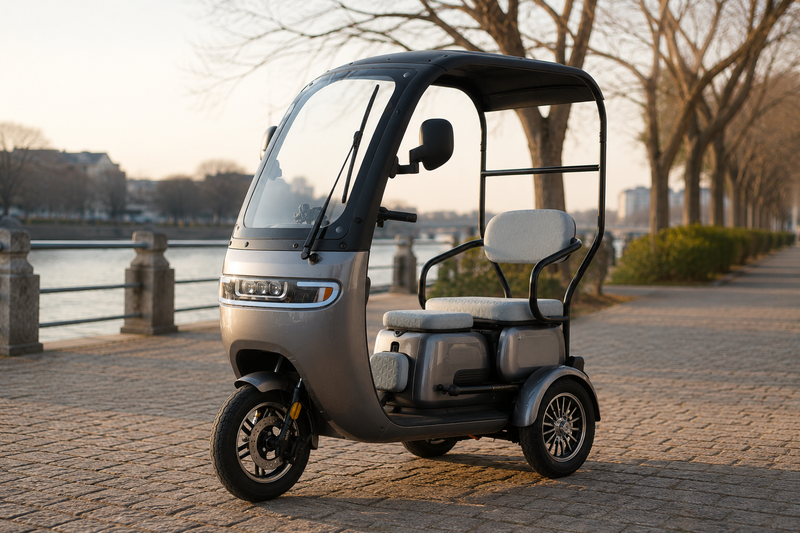
Many dealers I speak with ask for the "best" motor or the "biggest" battery right away. I understand why. You want to offer a powerful product. But after exporting tricycles for years, I've learned that the most successful partners don't start there. The real conversation begins with understanding your customers and your market. Pushing the highest specs isn't the goal. The goal is selling a tricycle that fits the job perfectly, which keeps your customers happy and your business profitable. Let's look at how we, as a factory, guide our partners to make these smart choices.
Why should you define the use case first?
Are your tricycles for heavy cargo, carrying passengers, or personal use? Guessing wrong leads to unsold inventory. Let's match the model to the job it needs to do.
Defining the use case is the most critical first step. A tricycle designed for heavy cargo delivery in a city needs completely different specs than one used for personal transport in a rural area.1 This single decision guides every other choice.
When a new dealer contacts us, my first question is always, "What will your customers use this for?" The answer changes everything. I remember a dealer in South America who wanted our most powerful cargo model. He was focused on the high motor wattage. But after we talked, I learned his customers were mostly families in a hilly town. They needed to carry groceries and sometimes their children. The heavy-duty cargo frame was overkill and uncomfortable. We switched him to a passenger model that had a slightly smaller motor but a better controller for climbing hills and much better suspension. His sales took off because the product actually solved his customers' problems. Thinking about the use case first prevents these kinds of expensive mistakes.
Matching Models to Market Needs
You must think like your final customer. What is their daily life like? What problem does this tricycle solve for them?
| Use Case | Key Feature Priority | Why It Matters |
|---|---|---|
| Urban Cargo Delivery | Strong Frame, Durability, Tight Turning | Must handle heavy loads all day, navigate traffic, and withstand constant use.2 |
| Rural Passenger Transport | Comfort, Range, Weather Protection | Journeys are longer, roads can be rough, and passengers need to be comfortable and dry.3 |
| Local Retail/Personal Use | Aesthetics, Ease of Use, Affordability | Looks are important. It should be simple to operate for non-professional drivers and priced for a family budget. |
Focusing on the use case ensures you're not just buying a product, but a solution that your market is waiting for.
Are motor power and range the only numbers that matter?
Many buyers get fixated on motor wattage and battery range. This is a big mistake that can lead to poor real-world performance. Let me explain what really counts.
Motor power and range are misleading on their own. Real performance comes from how the motor, controller, battery, and even the brakes work together. It's about the entire system, not just two numbers on a spec sheet.
I often get requests from experienced buyers like Koksal in Turkey. He knows the market and might ask for a "1500W motor." Instead of just giving him a price, I ask, "What load will it carry, and how steep are the roads?" A powerful motor is useless if the controller limits its output to save battery4, or if the frame can't handle the torque. It's the same with range. A large battery doesn't guarantee a long range if the tricycle is carrying heavy loads up steep hills in a cold climate.5 The entire system has to be balanced. A weak link in the chain, like poor brakes on a fast tricycle, is not just inefficient; it's dangerous.6 We help you choose a complete, balanced system that performs reliably in the real world.
A System, Not Just Parts
Stop looking at individual specs. Start thinking about how they work together to achieve a specific task. This change in perspective is key to choosing a successful product.
| Your Old Question | The Better Question to Ask Us |
|---|---|
| "What's the motor power (W)?" | "Can this model carry a 200 kg load up a 15-degree slope without overheating?" |
| "What's the battery capacity (Ah)?" | "What is the expected range with a 150 kg load on mixed flat and hilly terrain?" |
| "Is it cheap?" | "What is the total cost of ownership, including potential repairs for a weak frame or brakes?" |
By asking better questions, you move from buying specs to buying capability. You're buying the ability to climb a hill, the ability to complete a delivery route, and the ability to keep your customers safe and happy. That is a much smarter investment.
What are the real costs of choosing the wrong specs?
A cheap, poorly chosen tricycle seems like a good deal upfront. But hidden costs from returns, repairs, and legal trouble can destroy your profit margin. Let's look closer.
Choosing the wrong specs creates serious business risks. You'll face angry customer complaints, high repair costs from mismatched parts, and even fines or impounded shipments if the tricycles don't meet local certification standards.7
The biggest risk is not a faulty part; it's a mismatched product. If you sell a light-duty passenger tricycle to a customer who wants to haul construction materials, it will fail. That failure is not the factory's fault; it's a result of a poor purchasing decision. The consequences fall on you, the dealer. You have to handle the angry customer, pay for the repairs, and your reputation for selling quality products is damaged. We had a new client who ignored our advice and insisted on the cheapest model to save money. Six months later, he was calling us to order expensive replacement frames because his were cracking under the heavy loads. That initial "savings" cost him far more in the end.
Protecting Your Investment and Reputation
Think beyond the initial purchase price. The true cost includes everything that happens after the sale.
- Customer Complaints and Returns: A tricycle that doesn't have the range or power your customers expect will come back to your shop. This creates bad word-of-mouth and hurts future sales.
- High Repair Costs: An overloaded frame will crack. An overworked motor will burn out. These repairs come directly out of your pocket and reduce the profitability of every unit you sell.
- Certification and Legal Problems: This is a huge risk many dealers overlook. Countries like Turkey and those in the EU have specific rules (like EEC).8 If you import a vehicle that isn't certified for your roads, it can be impounded by customs.9 You could face large fines or be unable to register the vehicles for your customers. As your factory partner, we help you navigate these rules to ensure every tricycle you order is fully compliant.
Conclusion
Choosing the right electric tricycle is a key business decision. Focus on matching the product to your market's real needs to ensure customer satisfaction and your long-term profitability.
"The impact of road environments on rural periodic market ... - PMC", https://pmc.ncbi.nlm.nih.gov/articles/PMC11188437/. Research on light electric freight vehicles and rural passenger transport distinguishes cargo-oriented requirements such as payload and maneuverability from passenger-oriented requirements such as comfort, range, and suitability for rougher roads, contextualizing the article’s contrast between urban cargo and rural personal-use tricycles. Evidence role: general_support; source type: paper. Supports: Studies of light electric freight vehicles and rural passenger transport distinguish requirements such as payload, maneuverability, road roughness, comfort, and range.. Scope note: The support is comparative and contextual; it may draw from e-cargo bikes, three-wheelers, or rural transport studies rather than the exact product class discussed. ↩
"[PDF] The Final Frontier of Urban Logistics: Tackling the Last Metres", https://www.itf-oecd.org/sites/default/files/docs/final-frontier-urban-logistics.pdf. Urban freight and last-mile logistics studies describe delivery vehicles as operating under repeated stop-start cycles, dense traffic, payload demands, and high utilization, supporting the need for load capacity, maneuverability, and durability in urban cargo tricycles. Evidence role: general_support; source type: institution. Supports: Urban logistics research describes last-mile delivery as involving repeated stops, dense traffic, payload needs, and high utilization, which justify durability and maneuverability requirements.. Scope note: Such sources usually address urban delivery vehicles broadly, so the evidence is contextual rather than a direct test of a specific tricycle model. ↩
"Publication: A New Measure of Rural Access to Transport: Using GIS ...", https://openknowledge.worldbank.org/entities/publication/ffede5ec-11fa-59f3-9869-5ab741c40b3a. Rural transport literature documents that rural users often face longer travel distances, lower-quality roads, and exposure to weather, providing contextual support for emphasizing range, suspension comfort, and weather protection in rural passenger vehicles. Evidence role: general_support; source type: institution. Supports: Rural transport sources document longer access distances, variable or poor road quality, and the importance of safe and comfortable passenger mobility.. Scope note: The evidence would describe rural mobility conditions generally and may not specifically evaluate electric tricycles. ↩
"Why limit battery current in a controller? - Endless Sphere", https://endless-sphere.com/sphere/threads/why-limit-battery-current-in-a-controller.110118/. Motor-controller studies explain that electronic controllers regulate current, torque, and power delivery and may impose limits for battery protection, thermal management, or efficiency, supporting the point that motor rating alone does not guarantee usable output. Evidence role: mechanism; source type: paper. Supports: Motor-controller research explains that controllers regulate current, torque, and power and may limit output to protect the battery, motor, or thermal system.. Scope note: The evidence supports the electrical-control mechanism; it does not quantify how often this limitation occurs in commercial tricycles. ↩
"Using Lithium Batteries in Cold Weather | RELiON", https://www.relionbattery.com/knowledge/using-lithium-batteries-in-cold-weather?srsltid=AfmBOop7dR6YTht-CLhdO63TkVQ4rw4BRTJEt642X1lrepXL5LtT0Yng. Electric-vehicle energy-consumption and battery-performance research shows that payload, road grade, and low ambient temperature can increase energy use or reduce available battery performance, supporting the claim that nominal battery capacity alone does not guarantee range. Evidence role: mechanism; source type: research. Supports: Studies show that increased mass, climbing grades, and low temperatures raise energy consumption or reduce battery performance, lowering practical EV range.. Scope note: The magnitude of the effect depends on vehicle mass, battery chemistry, route, speed, and auxiliary loads. ↩
"Safe Driving Distance and Speed for Collision Avoidance in ... - PMC", https://pmc.ncbi.nlm.nih.gov/articles/PMC9504624/. Vehicle-safety standards and braking research link adequate braking performance to stopping distance, vehicle speed, mass, and roadworthiness, supporting the article’s statement that poor brakes on a faster vehicle create a safety hazard. Evidence role: mechanism; source type: government. Supports: Vehicle safety standards and braking research connect braking performance, stopping distance, speed, and mass with crash risk and roadworthiness.. Scope note: A standards source may define required braking performance rather than document accident rates for electric tricycles specifically. ↩
"Draft EU Regulation on Administrative Fines for Type Approval Non ...", https://www.interregs.com/articles/spotlight/239/draft-eu-regulation-on-administrative-fines-for-type-approval-non-compliance-published-. Government and market-surveillance guidance on vehicle conformity states that vehicles lacking required approvals or conformity documentation may be subject to enforcement measures, including refusal of market access, penalties, or seizure, supporting the article’s legal-risk claim. Evidence role: general_support; source type: government. Supports: Regulatory sources explain that vehicles placed on a market may require type approval or conformity documentation and that noncompliance can lead to enforcement actions.. Scope note: The source would directly support regulatory consequences but may not address customer complaints or repair costs from mismatched specifications. ↩
"[PDF] Regulation (EU) No 168/2013 of the European Parliament and of the ...", https://eur-lex.europa.eu/legal-content/EN/TXT/PDF/?uri=CELEX:32013R0168. EU type-approval law for L-category vehicles establishes regulatory requirements for certain two-, three-, and four-wheeled light vehicles, and Turkish vehicle-approval rules are commonly framed in relation to European type-approval requirements, supporting the article’s statement that these markets have specific certification rules. Evidence role: definition; source type: government. Supports: EU rules classify and type-approve L-category vehicles, including certain two-, three-, and four-wheeled light vehicles; Turkey has vehicle approval rules aligned with relevant frameworks.. Scope note: The source should be checked for the exact vehicle category and whether the article’s use of “EEC” matches the current legal terminology. ↩
"FAQ - Type approval of vehicles", https://single-market-economy.ec.europa.eu/sectors/automotive-industry/technical-harmonisation/faq-type-approval-vehicles_en. Customs and market-surveillance rules provide that imported vehicles without required approval or conformity documentation may be detained, refused entry, or seized, supporting the article’s warning that uncertified vehicles can be stopped at import. Evidence role: case_reference; source type: government. Supports: Customs or market-surveillance authorities can detain, refuse entry to, or seize imported vehicles that lack required conformity or approval documentation.. Scope note: Specific enforcement terminology and procedures vary by country, so the cited source should match the target market being discussed. ↩

